Bodytext
FA: 2019 Jon Walsh, Pete Hoang and 2025 Ines Papert, Sarah Huenicken
FFA: Ines Papert on 7th Sept. 2025 and Jon Walsh
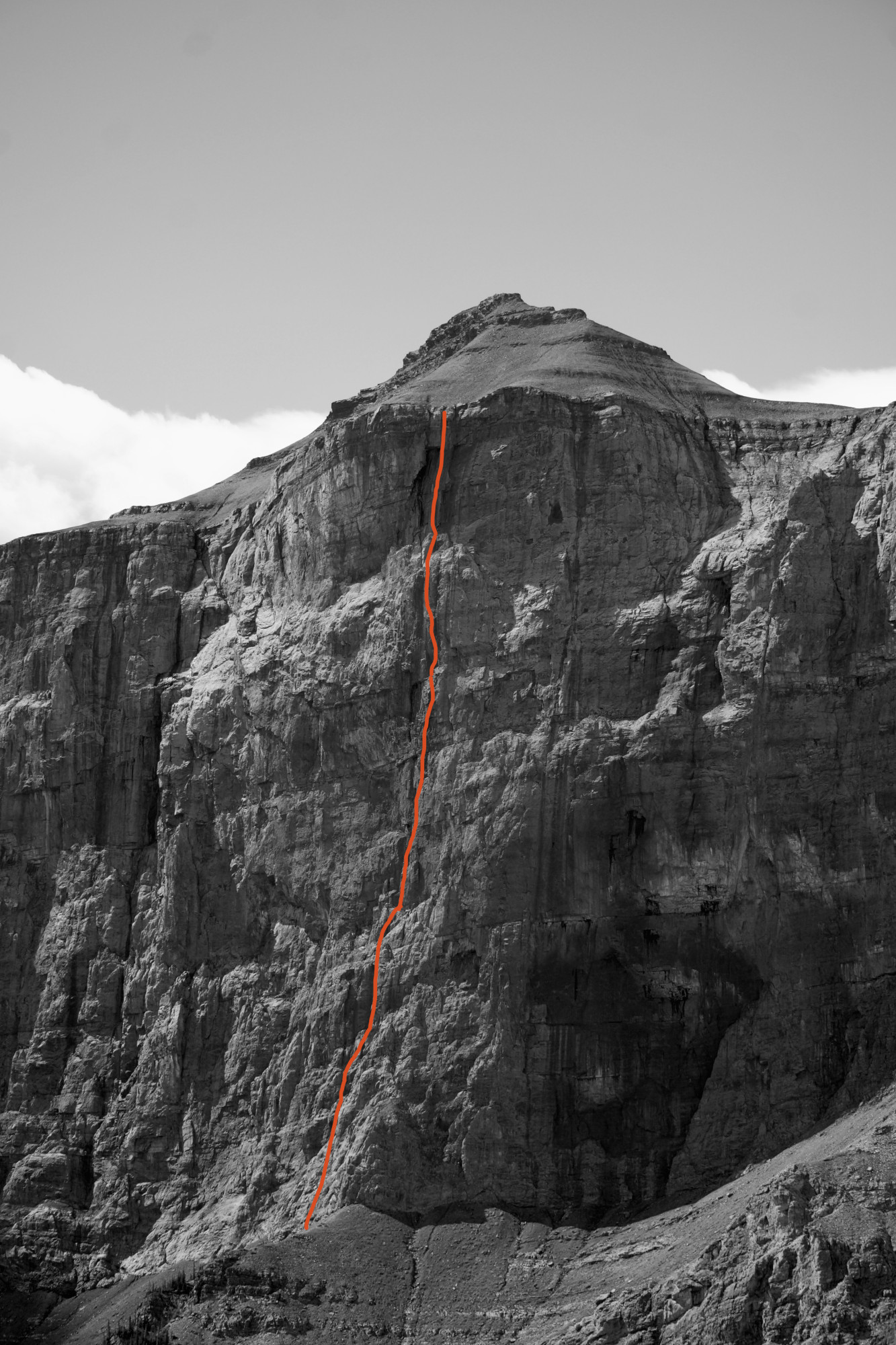
However putting up this route was a team effort. In 2018 / 2019, the Canadians Jon Walsh and Pete Hoang established the first 8 pitches ground-up trying to keep the use of bolts to a minimum, but only red-pointed the first 7 pitches. Pete then unexpectedly traded his climbing shoes for a mountain bike and has yet to return to the climbing world. In 2022, Jon Walsh returned to add a few bolts to the first 3 pitches, to both show the way and make them flow better.
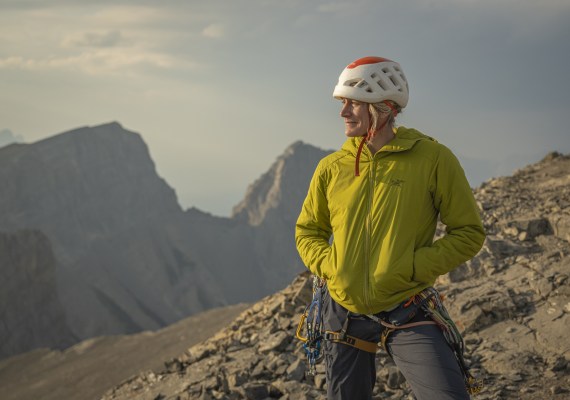
In 2025, Ines Papert was here to climb with Sarah Hueniken. Jon suggested that if they were up for an adventure, they could try to finish the route and add any “finishing touches” as they saw fit. So they climbed the first 6 pitches to check it out.
A couple of days later, they rappelled in from the top to find the last anchor, then climbed out establishing and bolting the last two pitches ground-up.
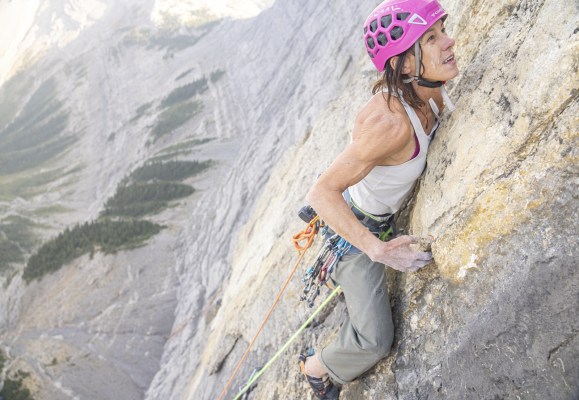
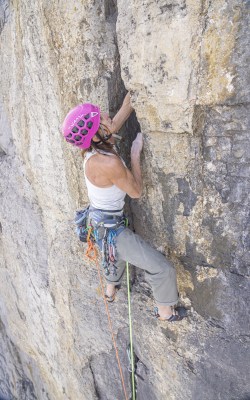
To prep for the first free ascent, Ines returned solo to the top via the scramble route, and used the fixed lines down to the crux to check out the moves, and tick / brush some key holds. This paid off as four days later, she sent the pitch first try for the ground up first free ascent, which was done in a 12 hour and 20 minute car-to-car effort.
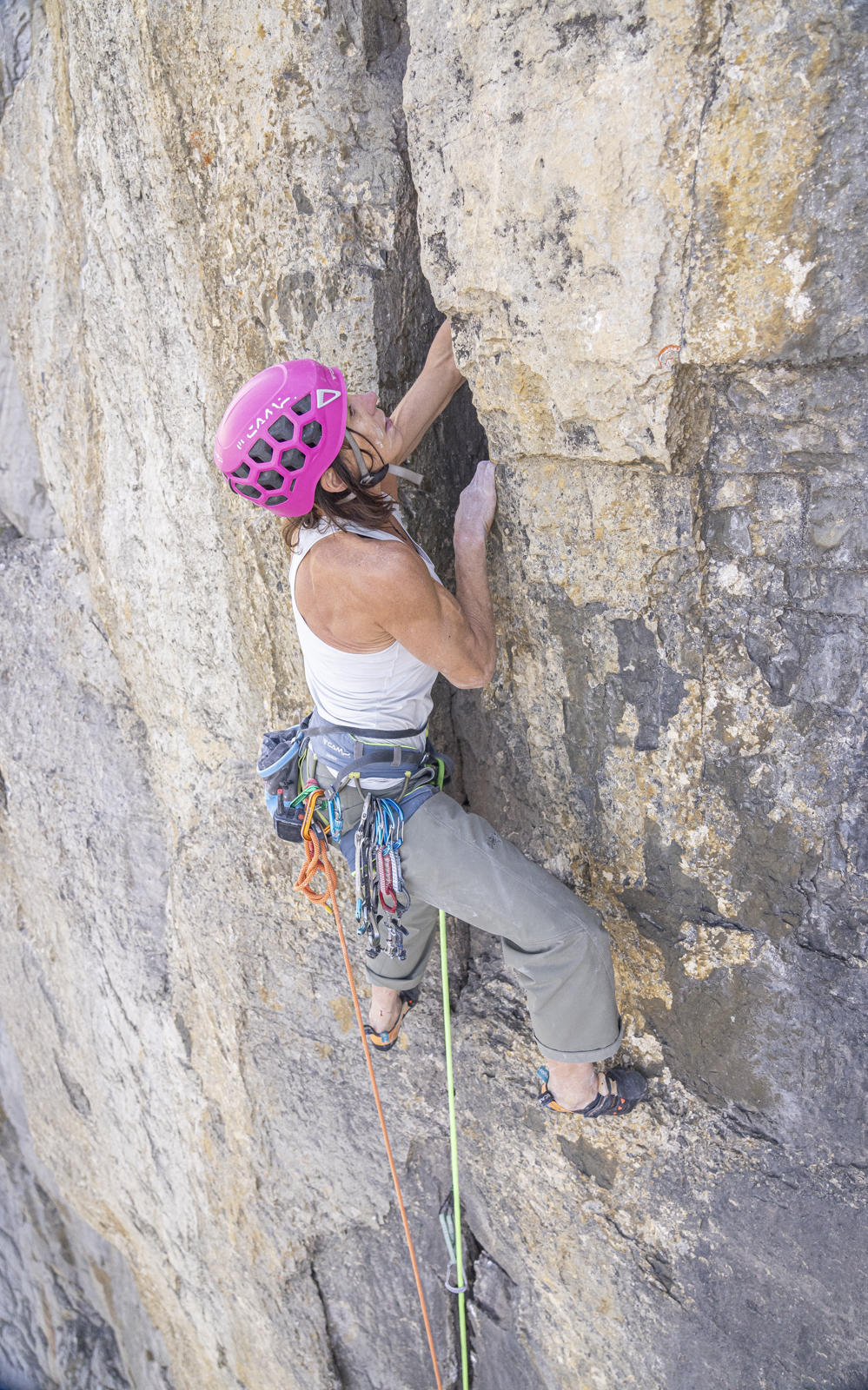
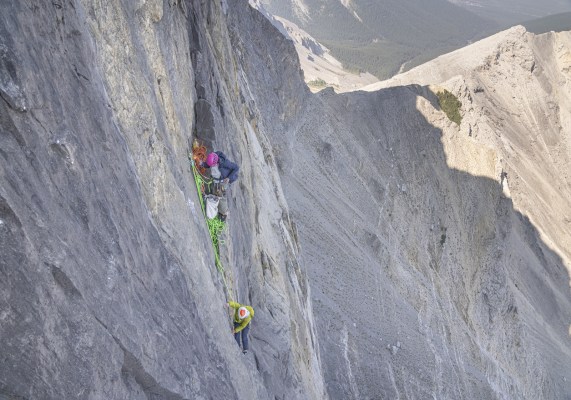
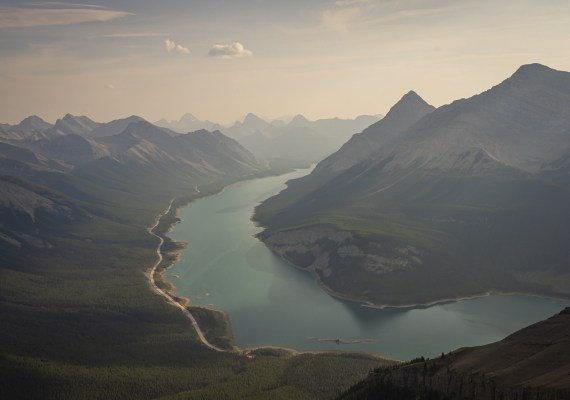
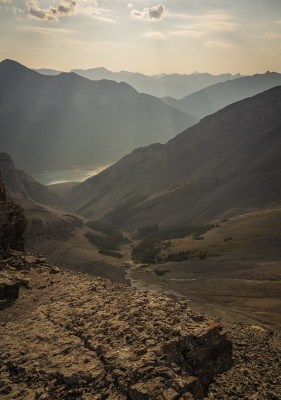
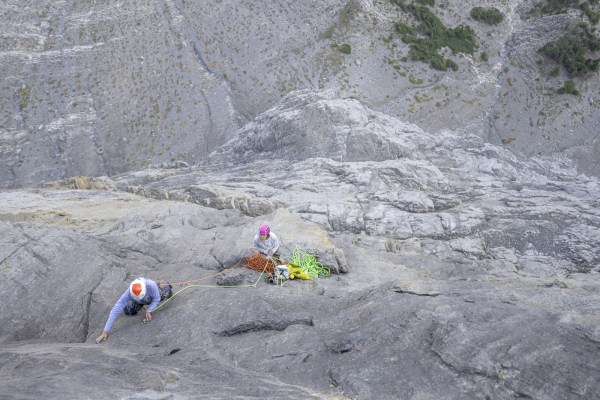
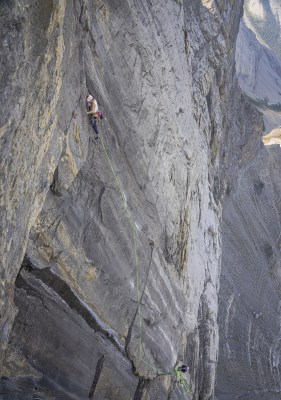
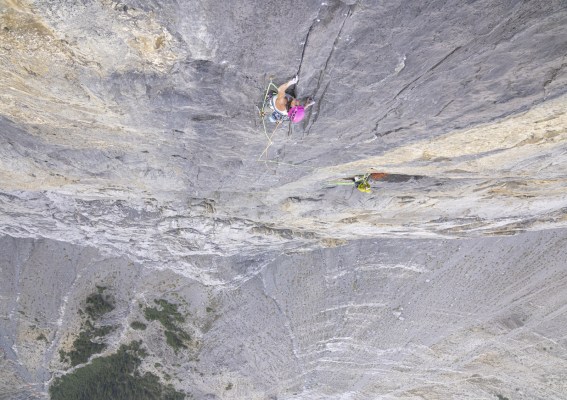
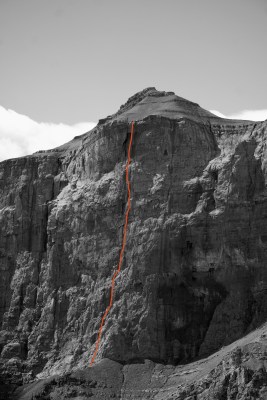
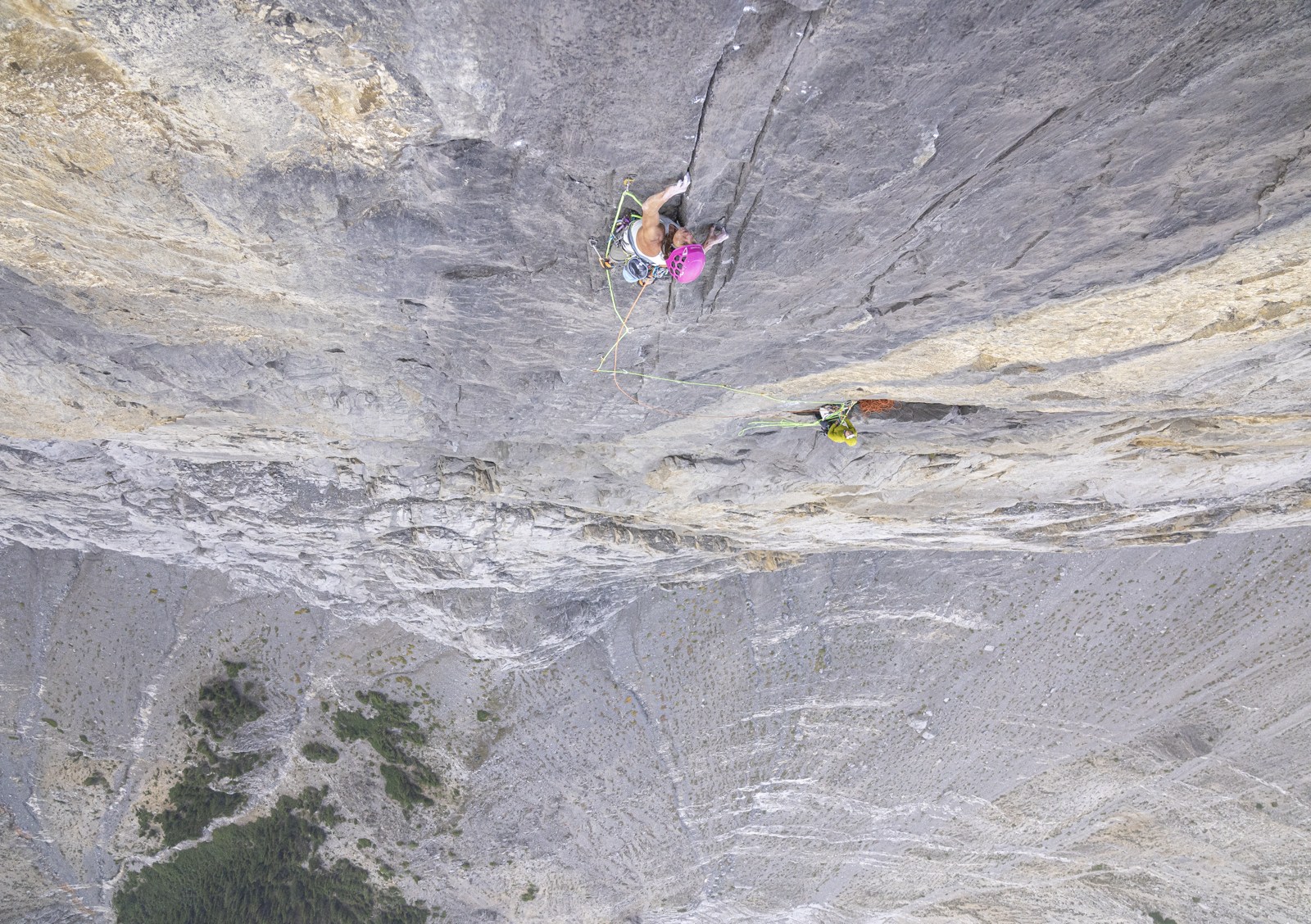
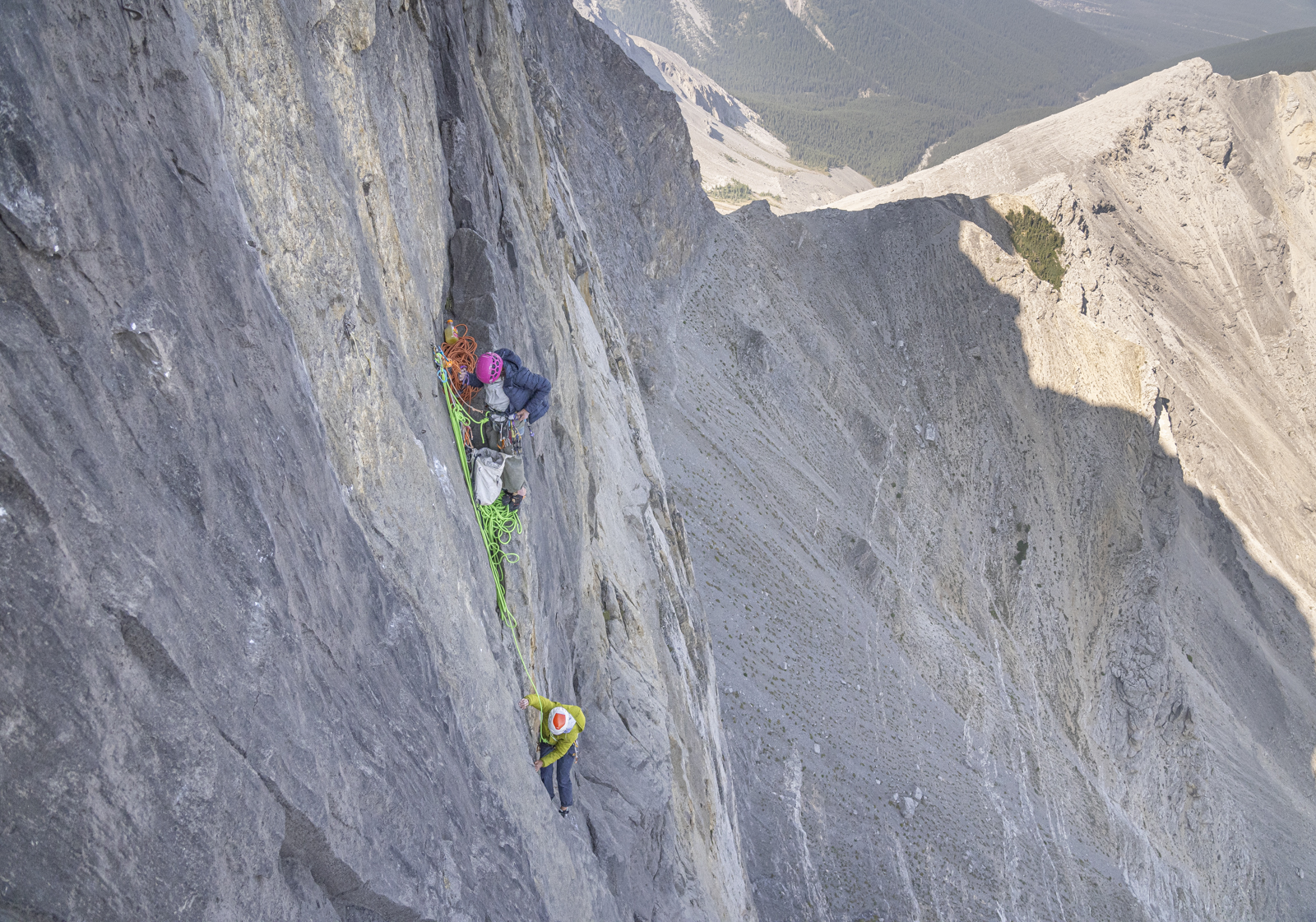
This is an alpine rock climb that has a very adventurous feel to it, and despite all the bolts, there is just as much traditional climbing on it. The Rimwall is 2680-meter summit in the Goat Range just south-west of Canmore Alberta. A 400-meter high east face of Palliser Limestone overlooks the pristine wind valley, and has several other established climbing lines of good quality. The steepest and longest section of the wall falls in a plumb line below the summit and is where this route ascends. The rock quality is generally excellent and much better than most routes in the area.
To access the east face of the Rimwall, drive about 25-30 minutes south of Canmore on the Smith Dorian highway and park at the trailhead to West Wind pass.
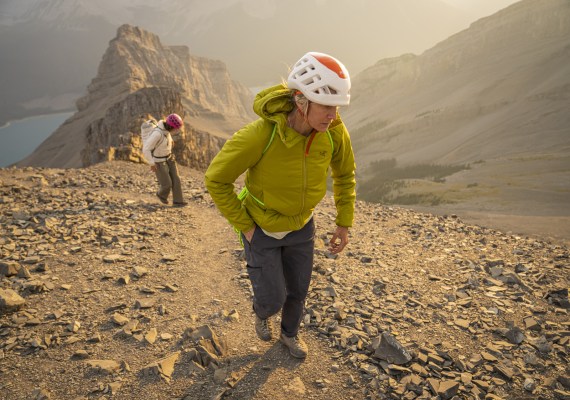
Hike up a good trail to the pass in about 45 minutes, to where the east face of the Rimwall is easily seen. From here it takes about 45 minutes to traverse below the cliff on exposed goat trails, which are pretty good for the first half, but become a little more difficult to follow towards the end. A red streak on the cliff that has a trickle of water running down it, is an obvious landmark. The route starts about 200-meters right of it, from the top of a ridge line that divides two scree bowls. Where the ridge line meets the wall, there is piton in a small overhang to hang a pack from if you intend on rappelling and also makes a good spot to gear up. The climbing starts 10 meters to its left. On two separate occasions, rats have eaten the shoulder straps from packs left here overnight, so be warned if you plan to stash here!
Facts
Gear & Route Beta
2 x 60m ropes, 1 for lead, 1 for hauling. 15 draws, at least 4 of which should be extendable. Single set of camsup to size .2 - 3 and a set of Totems. We found Totem cams to be quite useful, especially at the crux.
Half set of nuts optional, but some small to medium nuts could be useful. Some holds on the crux pitch could benefit from some brushing so don’t forget your brushes if you want stickier grips!
It’s best to pack light, so you can climb the East side of the mountain and walk off the West side. Plan to haul your packs from pitches 4-10 which for the most part are fairly good for hauling. Pitches 1-2 are worth climbing with packs on. Pitch 3 has a hard move with a pack but doable, or commit to a hauling up the slab.
All belays are bolted with rappel rings, so it’s possible to rappel from anywhere on the climb with 2 ropes.
The best season for this route is late summer to early autumn. There is a snow-bowl above the route which drains down it until mid july give or take, so if you see a big wet streak, it’s best to give it some time. As it’s an east face, it might be hot in the morning but nice in the afternoon. In Early September, the sun leaves the face around 1 pm.
Pitch by Pitch
Pitch 1: 60-meters 5.7
3 bolts and gear. Start about 10-meters left of the ridge and look for a bolt about 10-meters up. Climb easily up to this, and then another one a bit higher. Follow grooves and cracks to a big ledge with a bolted station on the back wall. Taking care not to run your rope through the scree on the ledge.
Pitch 2: 40-meters 5.7
4 bolts and gear. Straight up from the anchor, following the line of weakness, to a right facing corner. Climb the corner and follow the grooves up and left to the belay.
Pitch 3: 40-meters 5.10
3 bolts and gear. Climb easily up and right to short left facing corner. Up this, then back left towards obvious cracks above the belay. Up the crack, then follow an easier corner system that heads left and up towards the next belay station.
Pitch 4: 55-meters 5.10
1 bolt and gear. Climb the thin crack up the left facing corner above the belay. This leads to another corner and face crack on the right wall. Climb these up to easier terrain, and continue towards right facing corner with a nice looking crack. As it starts to overhang, a bolt leads right towards the arete. Once above the bolt, the next anchor is visible up and left at a good stance.
Pitch 5: 30-meters 5.12-
6 bolts and gear up to .75 camelot. Climb straight up past bolts and bouldery crux. As the bolts run out there are two options to get to the anchor that both involve 5.11- climbing. Either move up and left into a corner with a bolt to protect the exit onto the ledge, or, move right around a pillar with some cracks below a roof, and up thin cracks to the belay.
Pitch 6: 45-meters 5.11+
14 bolts and 1 cam (.4 or .5 camelot). Good sustained and varied climbing. Follow the bolt line from anchor to anchor. A cam placement in a good finger crack between the second and third last bolts will keep take care of a long run out there.
Pitch 7: 15-meters 5.11+
5 bolts. The line is obvious, follow the bolts to the next ledge
Pitch 8: 40-meters 5.13-
9 bolts and gear to #1 camelot. A rising traverse left of the anchor (all bolted), leads to a stunning finger crack that splits the wall. The crack starts thin and gradually widens before a big belay ledge at its top, and takes good gear.
Pitch 9: 35-meters 5.10
2 bolts and gear. Climb the crack above the anchor and about halfway up, trend right until you can continue up a right facing corner to belay at the top of the pillar.
Pitch 10: 45-meters 5.11-
3 bolts and gear. Climb the hand crack left of the belay, until you can take a foot traverse back right bast a bolt. At the end of the foot rail, head straight up to the obvious crack through the overhanging wall above, to a belay at the top of the wall!
10 minutes of hiking and a few 3rd class scrambling moves leads to the summit, and a good trail back to the parking that is popular with scramblers.